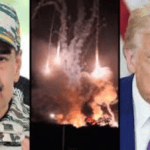
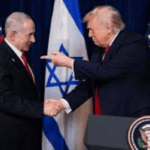
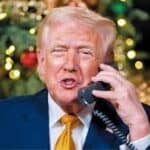
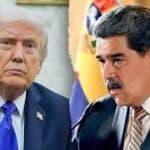
Washington / Caracas — U.S. President Donald Trump has intensified pressure on Venezuelan President Nicolás Maduro, warning him against defying Washington and vowing to retain oil seized from Venezuelan-linked tankers, while deliberately avoiding a clear statement on whether his administration seeks to remove Maduro from power.
Speaking to reporters during a press conference at his Mar-a-Lago residence on Monday evening, Trump issued a stark warning to the Venezuelan leader. “He can do whatever he wants to do; if he gets tough, it will be the last time he can get tough,” Trump said. When asked directly whether the United States aimed to oust Maduro, the president replied ambiguously, “That’s up to him.”
Trump’s carefully calibrated remarks contrasted with the more explicit rhetoric coming from other members of his administration. Earlier on Monday, Homeland Security Secretary Kristi Noem said on Fox News that Maduro “must go,” while Secretary of State Marco Rubio last week described the Venezuelan leader’s alleged cooperation with drug traffickers and terrorist groups as “intolerable,” though he stopped short of explicitly endorsing regime change.
The comments came amid an escalating U.S. campaign targeting Venezuela’s oil exports and maritime activity. Over the weekend, Washington lifted its blockade on tankers entering and leaving Venezuelan ports, even as U.S. forces continued to seize and pursue vessels linked to Caracas. On Saturday, American forces boarded an unsanctioned tanker owned by a Hong Kong–based entity and pursued a third vessel off the Venezuelan coast. Another tanker, the Skipper, was intercepted earlier on December 10.
Despite the rising tensions, Maduro appeared to strike a more moderate tone on Monday, saying Venezuela would continue to honor its contracts with Chevron Corp., despite what he described as “temporary and circumstantial conflicts” with the United States.
Later in the day, however, Venezuela’s foreign minister delivered a statement from Maduro on state television condemning the U.S. seizures. The president described the “theft” of two ships as an act of “aggression” and demanded an end to what he called “acts of piracy.”
The U.S. Coast Guard, which falls under the Department of Homeland Security, has overseen the tanker seizures, while the Pentagon’s Southern Command has coordinated the broader military deployment in the Caribbean and operations against vessels suspected of drug trafficking. According to U.S. officials, these operations have resulted in more than 90 deaths since early September.
The Trump administration has justified its campaign on multiple grounds, including curbing the flow of fentanyl into the United States—though experts note that the targeted routes and ships are more commonly associated with cocaine trafficking—as well as pressuring the Maduro government and reclaiming U.S. assets expropriated decades ago.
Washington accuses Maduro of leading the so-called Cartel of the Suns, an alleged drug trafficking organization involving senior Venezuelan officials that the U.S. has designated as a foreign terrorist group. Trump has repeatedly suggested he would consider ground operations to dismantle the network, fueling speculation that the United States may be preparing for direct military action against Venezuela.
The current U.S. military deployment in the Caribbean is the largest in decades and represents the most aggressive effort yet to strike at Venezuela’s oil industry, the backbone of its economy. The country exports roughly 900,000 barrels of oil per day, with about 30 percent transported via a shadow fleet similar to the tankers targeted by U.S. forces.
Oil revenues remain Venezuela’s primary source of foreign currency, but the pressure campaign is taking a toll. Government dollar inflows fell by approximately 30 percent during the first ten months of 2025, intensifying strain on the bolívar and increasing pressure on the country’s already fragile exchange rate.
Install our app using add to home screen in browser. In phone/ipad browser, click on share icon in browser and select add to home screen in ios devices or add to dock in macos