A new 20-point American peace plan aimed at ending the war in Ukraine has been made public, outlining sweeping political, security, and economic measures designed to bring a lasting ceasefire and postwar reconstruction. The full text of the proposal was published on Wednesday by The Kyiv Independent, following its presentation a day earlier by Ukrainian President Volodymyr Zelensky during a briefing with journalists.
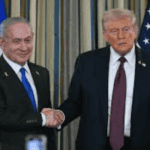
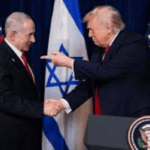
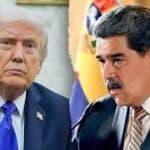
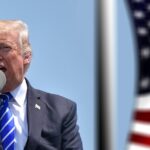
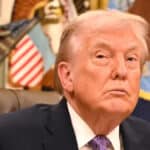
The plan positions former U.S. President Donald Trump at the center of the process, naming him chair of a newly created Peace Council that would oversee implementation and enforcement of the agreement.
Sovereignty, Security, and EU Path
At its core, the draft agreement reaffirms Ukraine’s sovereignty and territorial integrity. The signatories would formally recognize Ukraine as an independent state, while Russia would commit to a comprehensive and binding non-aggression agreement toward Ukraine and Europe, ratified by the Russian State Duma.
Ukraine would receive robust security guarantees similar to NATO’s Article 5. Under the proposal, any future Russian attack on Ukraine would trigger a coordinated military response by the United States, NATO, and European partners, along with the immediate reinstatement of global sanctions on Russia. Conversely, if Ukraine were to initiate an unprovoked attack on Russian territory, those guarantees would be void.
The plan also states that Ukraine will become a member of the European Union on a clearly defined date, with President Zelensky suggesting 2027 or 2028 as a possible timeframe. Until then, Ukraine would gain short-term preferential access to the EU market.
Military Provisions and Front Lines
Ukraine’s peacetime armed forces would be capped at 800,000 personnel. The document proposes that the military positions held by both sides on the day the agreement is signed would be recognized as the actual front line in the Donetsk, Luhansk, Zaporizhzhia, and Kherson regions.
For the agreement to enter into force, Russia would be required to withdraw its troops from occupied areas of the Dnipropetrovsk, Mykolaiv, Sumy, and Kharkiv regions. International forces would then be deployed along the front lines to monitor compliance, supported by unmanned satellite surveillance systems to detect violations.
Both Russia and Ukraine would commit to resolving future territorial disputes exclusively through diplomatic means and to fully uphold the Geneva Conventions and universal human rights.
Reconstruction and an $800 Billion Development Package
A major pillar of the plan is economic recovery. The proposal calls for the creation of multiple reconstruction and humanitarian funds aimed at raising up to $800 billion—an amount estimated to cover the destruction caused by the war.
Key elements include a global development package focusing on infrastructure, city reconstruction, and the modernization of Ukraine’s economy. A dedicated development fund would invest in high-growth sectors such as technology, data centers, and artificial intelligence. The United States and American companies would work with Ukraine to rebuild and operate gas pipelines and storage facilities, while the World Bank would provide a special financial package to accelerate recovery.
The plan also envisions expanded exploitation of minerals and natural resources and the establishment of a high-level working group led by a prominent global financial expert, designated as a Prosperity Administrator, to oversee long-term economic growth.
Energy, Trade, and Nuclear Commitments
The agreement addresses critical energy infrastructure, including control of the Zaporizhzhia Nuclear Power Plant and the restoration of the Kakhovka hydroelectric power plant. While Washington has proposed joint operation of the nuclear plant by Ukraine, Russia, and the United States, Kyiv opposes Russian involvement and instead favors a joint U.S.-Ukraine venture.
Ukraine would reaffirm its commitment to remain a non-nuclear weapon state under the Nuclear Non-Proliferation Treaty and would accelerate negotiations for a free trade agreement with the United States.
Humanitarian Measures and Elections
Humanitarian provisions include an “all-for-all” exchange of prisoners of war, the release of detained civilians—including children and political prisoners—and coordinated efforts to alleviate civilian suffering. Russia would also guarantee Ukraine’s unrestricted commercial use of the Dnieper River and the Black Sea, with freedom of navigation ensured through a separate maritime agreement.
The plan stipulates that Ukraine must hold presidential elections as soon as possible after the agreement is signed, signaling a return to full democratic processes under peacetime conditions.
Peace Council and Ceasefire
Implementation of the legally binding agreement would be monitored by the Peace Council, chaired by Donald Trump and comprising representatives from Ukraine, Europe, NATO, Russia, and the United States. Any violations would result in sanctions.
According to the draft, the ceasefire would take effect immediately once all parties agree to the terms. The United States is expected to formally submit the proposal to Russia, with the hope that, if approved, it would be signed by leaders from the U.S., Ukraine, Russia, and Europe, marking a potential turning point in the nearly three-year conflict.
Install our app using add to home screen in browser. In phone/ipad browser, click on share icon in browser and select add to home screen in ios devices or add to dock in macos