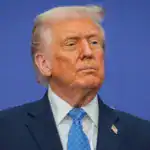
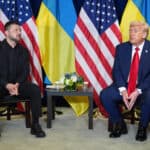
A newly released Natural Security Strategy, signed by U.S. President Donald Trump, is raising significant geopolitical concerns in Europe after outlining an approach that critics say seeks to portray Europe as a continent in decline and position the United States as its paternalistic savior. Analysts warn that the document reflects a broader strategy aimed at fracturing European unity while redirecting U.S. attention toward countering China’s rise.
The 30-page strategy report depicts Europe as a region weakened by immigration and cultural erosion, asserting that the continent faces “complete decline” within two decades. The document offers the United States as the power capable of stepping in—though, notably, it highlights support not for Europe’s democratic institutions, but for far-right, supremacist, and anarcho-capitalist movements gaining traction across several member states.
A Strategic Narrative Amid America’s Own Decline
Experts are cautioning that the narrative of European decay obscures deeper structural problems within the United States itself. America’s loss of industrial capacity, weakening monetary position, and declining share of global exports signal long-term vulnerabilities. Meanwhile, China and India continue to expand their dominance in machinery, advanced manufacturing, artificial intelligence, robotics, and renewable energy.
According to the World Trade Organization (2025), China’s share of global exports rose by nearly 9% between 2002 and 2024, while the United States’ share fell by 1.3%. China also controls more than 80% of the global supply of certain critical minerals—such as lithium—essential for battery production, electronics, and weapons systems.
This reality fuels what observers describe as the Trump administration’s obsession with China. However, Beijing has largely dismissed U.S. tariff threats, citing its leverage over rare earth exports and its substantial holdings of U.S. public debt. Trump’s retreat on tariff escalation has been notable, pushing his administration to seek geopolitical victories elsewhere—most prominently in Europe.
A Growing Rift Between Washington and Europe
The strategy’s tone has puzzled many European officials, given that the continent has been a key U.S. ally since the Bretton Woods agreements of 1944. Instead of strengthening transatlantic ties, the document appears to widen the divide.
Recent polling shows the depth of this mistrust:
48% of Europeans now view Trump as an “enemy of Europe.”
74% want their country to remain in the European Union.
63% of Britons believe Brexit has been a failure.
Analysts say these numbers reflect Europe’s desire to distance itself from Washington’s increasingly confrontational rhetoric.
Weaponizing Migration, Deregulation, and Defense Spending
The strategy identifies several priorities for reshaping Europe:
Rolling back European regulations—a move backed by U.S. tech and industrial lobbies.
Pushing European rearmament, which would increase reliance on American arms exports.
Promoting privatization in health, education, and pensions to weaken the European social model.
Stoking fears of immigration to benefit far-right parties, despite migrant labor being essential for agricultural, construction, and care-sector productivity.
Economists argue that both Europe and the U.S. depend heavily on migrant labor to sustain growth. In fact, U.S. agricultural regions are already experiencing shortages due to Trump’s aggressive deportation policies.
Undermining America’s Own Strengths
The United States’ long-standing technological edge has historically rested on strong universities, robust research funding, and a welcoming immigration system that attracts global talent. However, Trump’s hostility toward universities and efforts to restrict skilled immigration are undermining these foundations.
China, in contrast, is actively recruiting scientists and researchers from American institutions by offering competitive funding and opportunities to build new laboratories in STEM fields.
A Strategic Shift Toward Russia?
Some analysts believe the administration may be exploring a geopolitical realignment with Russia as a counterweight to China’s ascent. This possibility has been reinforced by comments from Vice President J.D. Vance and Trump himself hinting at a more cooperative stance toward Moscow.
Such a shift would deepen the strategic pressure on Europe by isolating it between two superpowers. With nearly 500 million consumers, the EU represents one of the world’s largest markets—making it a central arena in the global contest for economic leadership.
A Clear Objective: Weakening Europe from Within
The Natural Security Strategy signals a deliberate effort by Washington to exploit Europe’s internal divisions. Through funding ideological movements, cultivating far-right networks, and shaping public narratives, the Trump administration appears intent on reducing Europe’s ability to act as an independent geopolitical actor.
Analysts warn that this strategy, if pursued, could reshape the global balance of power—potentially pushing Europe toward greater vulnerability at a time when the world is increasingly defined by the rivalry between the United States and China.
Install our app using add to home screen in browser. In phone/ipad browser, click on share icon in browser and select add to home screen in ios devices or add to dock in macos