The United States has carried out airstrikes against militants linked to the Islamic State (IS) group in north-western Nigeria, marking a significant escalation of US military involvement in the region. The strikes targeted camps operated by the group in Sokoto state, near Nigeria’s border with Niger, according to the US military.
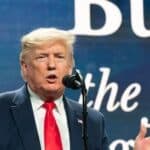
In a statement, the US said an initial assessment indicated “multiple” fatalities at the sites hit. President Donald Trump confirmed the operation in a social media post on Christmas Day, describing the strikes as “powerful and deadly” and labelling the militants “terrorist scum.” He accused the group of “targeting and viciously killing, primarily, innocent Christians,” and vowed not to allow what he called “radical Islamic terrorism” to prosper.
Nigerian officials, however, emphasized that the operation was not motivated by religion. Foreign Minister Yusuf Maitama Tuggar told the BBC that the strikes were a joint operation planned well in advance and based on intelligence provided by Nigeria. He stressed that the action “had nothing to do with a particular religion” and said the timing—on Christmas Day—was coincidental.
“It could be any other day,” Tuggar said. “This is about attacking terrorists who have been killing Nigerians.” He did not rule out further joint strikes if necessary.
Conflicting Accounts on the Ground
Eyewitness accounts from the area have raised questions about the impact of the attack. Umar Jabo, a resident near the village of Jabo in Sokoto state, told BBC News that the strike occurred late on Thursday night. “Everyone thought it was a plane. It crashed in fields,” he said. Images circulating on social media appeared to show locals filming burning debris in a field.
Jabo denied that IS fighters were present in his community. “Here in Jabo, we live peacefully, and there is no conflict between us and Christians,” he said. Local lawmaker Bashar Isah Jabo also insisted that there were no IS or Lakurawa militants in the village, adding that the missile landed less than 500 metres from a local hospital.
Militancy Beyond the Northeast
Nigeria has battled a complex web of jihadist groups for more than a decade, primarily in the north-east, where Boko Haram and the Islamic State West Africa Province (ISWAP) have killed thousands. Most victims of that violence have been Muslims, according to data from the Armed Conflict Location & Event Data Project (Acled).
However, analysts say IS-aligned militants have recently sought to expand into north-western states such as Sokoto and Kebbi. Nigerian human rights lawyer and conflict analyst Bulama Bukati suggested that the strikes may have targeted a newer IS-aligned splinter group known locally as Lakurawa.
“They started slipping into Nigeria in 2018, but over the past 18 months or two years they established camps in Sokoto and Kebbi states,” Bukati said. “They have been launching attacks and imposing their social laws over people in those areas.”
According to BBC Monitoring, pro-IS social media channels have reported frequent US reconnaissance flights over Sokoto and Borno states in recent weeks, indicating heightened surveillance prior to the strikes.
Religious Persecution Debate
The Trump administration has repeatedly accused Nigeria of failing to protect Christians and has claimed that a “genocide” is being carried out against them. Trump has designated Nigeria a “country of particular concern” under US religious freedom laws, a status that can lead to sanctions.
Nigerian officials and independent monitoring groups dispute this characterization. Violence in Nigeria, they say, affects people across religious lines. In addition to jihadist insurgencies, central Nigeria has seen deadly clashes between mostly Muslim herders and predominantly Christian farming communities over land and water, with atrocities committed by both sides.
Broader US Campaign Against IS
US Defense Secretary Pete Hegseth thanked the Nigerian government for its “support and cooperation” and wished “Merry Christmas” in a post on X. The US Department of Defense later released a short video appearing to show a missile launch from a ship, though it did not specify the platform used in the Nigeria strikes.
The operation is the second major US action against IS in recent weeks. Last week, the US said it carried out a “massive strike” against IS targets in Syria, hitting more than 70 locations with fighter jets, attack helicopters, and artillery, in retaliation for the killing of three Americans.
In a statement on Friday, Nigeria’s foreign ministry said the country remains engaged in “structured security co-operation with international partners, including the United States,” to counter terrorism and violent extremism.
As investigations continue into the impact of the Sokoto strikes, the operation underscores both the evolving geography of jihadist threats in Nigeria and Washington’s willingness to intervene militarily alongside regional partners.
Install our app using add to home screen in browser. In phone/ipad browser, click on share icon in browser and select add to home screen in ios devices or add to dock in macos