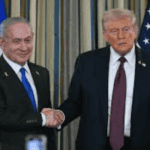
U.S. President Donald Trump on Monday warned that the United States could back another major military strike against Iran if Tehran resumes rebuilding its ballistic missile or nuclear weapons programs. He also issued a stark warning to Hamas, saying the Palestinian militant group would face severe consequences if it refuses to disarm, following high-level talks with Israeli Prime Minister Benjamin Netanyahu in Florida.
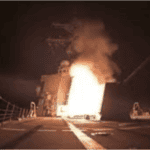
Speaking alongside Netanyahu at his Mar-a-Lago estate in Palm Beach, Trump suggested that Iran may be attempting to restore its weapons capabilities after a large-scale U.S. strike carried out in June. According to Trump, intelligence reports indicate Iran could be shifting its activities to new locations after previous sites were destroyed.
“I’ve been reading that they’re building up weapons and other things,” Trump said during a press conference. “If they are, they’re not using the sites we obliterated, but possibly different sites.”
Trump added that the U.S. was closely monitoring Iran’s actions and warned that renewed efforts to develop weapons would not go unanswered. Referring to the B-2 bomber used in the earlier strike, he remarked that Washington did not want to repeat such a long and costly mission unless absolutely necessary.
The comments came as Iran confirmed last week that it had conducted missile exercises for the second time this month, following a 12-day conflict with Israel in June. While Netanyahu has said Israel does not seek a direct confrontation with Iran, he acknowledged concerns about Tehran’s activities and said he planned to raise them with Trump.
In addition to Iran, the talks focused heavily on Gaza and the fragile ceasefire between Israel and Hamas that took effect in October after two years of fighting. Trump said he wants to move toward a second phase of the ceasefire, which would involve deploying international peacekeeping forces in Gaza under a U.N. Security Council resolution passed on Nov. 17.
However, progress remains stalled. Israel and Hamas have accused each other of violating the agreement, and Hamas has refused to disarm while reasserting control in parts of Gaza still occupied by Israeli troops. Israel has warned that if Hamas does not give up its weapons peacefully, it will resume military operations.
Trump placed the blame squarely on Hamas, arguing that Israel has upheld its commitments under the deal. When asked what would happen if Hamas continues to refuse disarmament, Trump issued a blunt warning: “There will be hell to pay.”
Trump’s broader plan for ending the Gaza war envisions a full Israeli withdrawal from the territory, Hamas surrendering its weapons and abandoning any governing role, and the establishment of a transitional authority. The first phase of the ceasefire included limited Israeli withdrawals, increased humanitarian aid, and exchanges of hostages for Palestinian detainees.
Israeli officials said Netanyahu would insist that Hamas complete the first phase by returning the remains of the last Israeli hostage believed to be in Gaza, Ran Gvili, before any further steps are taken. Israel has also declined to open the Rafah crossing between Gaza and Egypt—another condition of Trump’s plan—until Gvili’s remains are returned.
Beyond Gaza and Iran, Trump and Netanyahu discussed regional issues including Lebanon, Syria, and Turkey. Trump said he would explore the idea of Turkish peacekeepers in Gaza, a sensitive topic given strained relations between Israel and Turkey despite Trump’s warm ties with Turkish President Recep Tayyip Erdogan.
Netanyahu also said Israel seeks a peaceful border with Syria, while Trump expressed confidence that Israel could work with Syria’s new president, Ahmed al-Sharaa, who came to power after the ouster of Bashar al-Assad last year. Israel, however, remains wary of the new Syrian leadership and has previously carried out strikes in Damascus.
Despite some private concerns among Trump’s aides about Netanyahu’s commitment to the Gaza ceasefire, Trump’s remarks underscored his continued alignment with the Israeli leader. He struck a warm tone during their meeting, while Netanyahu reciprocated by announcing he would gift Trump Israel’s prestigious Israel Prize.
Overall, Trump’s comments signaled a willingness to risk renewed hostilities involving both Gaza and Iran, even as he continues to claim credit for brokering ceasefires across the region and positioning himself as a central power broker in Middle East diplomacy.
Install our app using add to home screen in browser. In phone/ipad browser, click on share icon in browser and select add to home screen in ios devices or add to dock in macos